Convert XML to JSON is an essential necessity for researchers, developers as well as anyone who works in the field of structured data. Since applications are becoming more driven by APIs and data, JSON has emerged as the standard method of data exchange because of its ease of use and ease of use. XML although still widely utilized, tends to be more complicated and verbose.
Utilizing an online application for converting XML to JSON lets users transform information quickly, without having to write scripts or installing programs. The process is easy, simple, and suitable for technically-minded and non-technical people.
Understanding XML And JSON Formats
XML is the name of a markup language used to help you store and transfer information in a logical manner. It employs nested tags as well as attributes. This makes it extremely powerful, but can be difficult to comprehend and read. XML can still be used for configuration file, old platforms, and in enterprise applications.
JSON On contrary it is light and simple to grasp. It represents data as key-value pair and arrays. This makes it perfect for Web applications and APIs. This distinction is one reason that most users choose to change XML into JSON for use on modern-day systems.
Why Convert XML To JSON
There are a variety of benefits to changing XML into JSON. JSON is more straightforward to read and process faster and it is compatible with current programming languages. It is common for developers to change XML responses to JSON for the purpose of reducing data handling within applications.
Another factor is the ease of reading. JSON data is less cluttered which makes it simpler to analyze and maintain. If the data is required to be shared between platforms or service, switching from XML to JSON enhances efficiency and lowers the complexity.
How Convert XML To JSON Tools Work
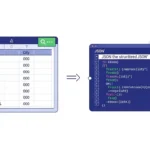
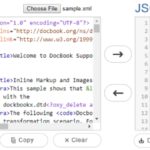
Online tools for converting XML into JSON operate directly within the browser. Users can either upload or paste XML information, and then the program processes the structure to produce an identical JSON format. It is done instantly without any technical setup.
The tools are able to automatically manage the nested elements, attributes and arrays, which ensures accuracy in output. These tools are ideal to speed up development, testing as well as data transformation tasks.
Benefits Of Using Convert XML To JSON Online Tools
Utilizing the online converter XML into JSON tool will save you the time and effort. Instead of manually writing new data or making custom scripts users can finish the job in a matter of minutes.
Key Advantages Of Online Conversion
- No software installation required
- Rapid and exact outcomes
This makes online tools the ideal choice for your everyday requirements for data conversion.
Convert XML To JSON For Developers
Developers often convert XML into JSON for applications, files for configuration or projects to migrate data. Modern frameworks and libraries are designed to work with JSON which makes it the standard format used to exchange data.
Through the conversion of XML data to JSON developers are able to integrate older systems into modern software much more quickly. This boosts efficiency in workflows and minimizes the possibility of mistakes during handling data.
Convert XML To JSON For Data Analysis
Data analysts can benefit too of software that converts XML into JSON. JSON is simpler to integrate into data processing software as well as scripting tools. Its format lets analysts quickly remove values and carry out transforms.
Converting XML into JSON makes it easier to clean data and preparation, particularly in the case of large databases or pipelines that are automated.
Accuracy And Structure During Conversion
The accuracy is vital in converting XML into JSON. An effective tool will preserve the structure of the data while transcoding it into JSON format. Aspects, elements as well as repeated nodes can be correctly converted to make sure that all information is not deleted.
How Structure Is Preserved
- The elements of XML transform into JSON objects
- The tags that are repeated convert to arrays
This systematic approach guarantees consistent and reliable outcomes that are consistent and predictable.
Security And Privacy When Converting XML To JSON
If you are using online tools for converting XML to JSON Privacy and security are key aspects to consider. The trusted tools only process data for a short period of time and don’t store data for the duration of time. It protects personal information and guarantees privacy for users.
It is important to use instruments that handle information in a responsible manner and erase the data once it has been processed.
Convert XML To JSON Compared To Manual Methods
Converting manually XML into JSON could be lengthy and risky. Making scripts or using complicated software demands technical expertise and time to set up. Online conversion XML in JSON tools eliminate these obstacles with their instant, browser-based solutions.
In comparison to manual processes The online options are quicker as well as easier to access on any device. This makes the tools suitable for beginners as well as professionals.
Common Use Cases For Convert XML To JSON
A lot of users depend on the convert XML to JSON tools to perform everyday tasks. Developers check API responses, and students are working on assignments for data as well as businesses modify configuration files to facilitate system integration.
The versatility of JSON is what makes it suitable for an array of different purposes in addition to the fact that converting it to XML allows you to in bridging the gap between traditional systems and the latest.
Conclusion
Convert XML to JSON is a crucial step for modern data handling that allows for simpler, quicker workflows that are more efficient. JSON’s light structure and its compatibility with current applications make it the ideal option for both analysts and developers alike.
With a trusted online converter XML in JSON tool, users are able to convert data fast, precisely and secure. This process helps to reduce time and effort, simplifies as well as facilitates smoother integration between digital and traditional projects.